There seems to be a lot of (very understandable) confusion around skin undertones and overtones. If you’ve had your colours analysed you’ll know that your undertone determines what season you are and yet your undertone is invisible. If you are an Autumn or Spring it can be said you have warm undertones; conversely if you are a Summer or Winter it can be said you have cool undertones. Colour analysis is not about overtones. If it were, women who wear the same foundation would be the same Season.
People often think undertone is skin colour – it’s not. Your undertone is invisible. Your overtone however, is not invisible. It’s the visible colour of your skin. When purchasing foundation both overtone and undertone are important. Some companies have finally cottoned on to undertones. Cosmetics companies who understand undertones and overtones are much more likely to have a foundation shade that matches your skin. Shopping for foundation becomes a lot easier. Your overtone might look yellow, or pink, brown or peachy. It might be described as sand, beige, ivory, biscuit or ebony. All common foundation names. Your undertone might be described by cosmetics companies as ‘pink’ or ‘rose’ if it is cool and ‘yellow’ or ‘golden’ if it is warm.
There is also such a thing as a false overtone. This is the colour your skin can appear to turn when you are wearing the wrong colour. When I wear khaki I look jaundiced. A Winter wearing the wrong colour might look ruddy in the face.
What influences your undertone? There is no definitive answer to this, but it is generally considered that the following are factors:
Oxygenated (red) or non-oxygenated (blue) blood vessels that run under the surface of the skin.
Melanin (which also influences hair and eye colour). The more melanin in the skin, the darker the skin tone.
Skin thickness. This varies by Season and influences how much colour shows through.
Carotene, which gives skin a yellow hue.
The only way to find out whether you have cool or warm undertones is by having your colours analysed in person. Some people offer online colour analysis where you send them a series of photos. I love the idea of it, but unfortunately it’s often inaccurate. It’s impossible to simply look at someone and tell what season they are (although I’m often asked to do this! 😉 ). During an in-person colour analysis session it’s important that you see the way the colours change your skin, in real time, in front of the mirror. Watching your skin react and your face change is all part of the (deeply exciting) process.
Colour analysis is not about limiting options, but about opening your eyes to all the colours you can wear. Sometimes, prior to a draping, a client will worry that the process will limit the colours they ‘should’ wear, but the opposite is always true; afterwards, they express surprise at the wide range of colours that look great on them. Before I had my colours done, I believed I couldn’t wear pink. Afterwards, I realised I had just been looking at the wrong pink! In fact, I had so many shades of pink that looked good on me, from a cool dusty rose which really seemed to bring my skin to life, to a raspberry pink which looked especially good if I wore it in both my lipstick and a scarf.
Image: Kettlewell Colours
In our session, I will start by covering the basics of colour theory and answering any questions you might have. After our introductory chat, we will begin the draping itself. We will establish which season you fall into, and this can take anywhere from 45-90 minutes; I like to allow 2-3 hours for a draping as a minimum. Once we’ve ascertained your season, we’ll go through every drape I have for that season and fine tune. Whilst all colours in your season will look good on you, some will really make you shine and my favourite part of the process is finding the colours that are your very, very best.
After we’ve done this, and I’ve given you your new colour swatch, we can discuss make-up, hair colour, etc. I encourage clients to bring along their make-up or any clothes they might have questions about.
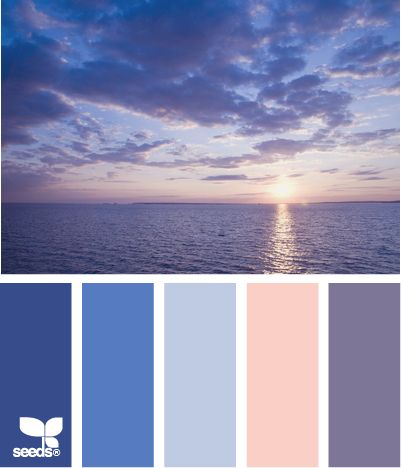
Image: DesignSeeds.com
What you need to know before your draping
Your face will need to be free of make-up and fake tan.
If you’ve dyed or bleached your hair, I will ask that you wear my (very fetching) white head scarf during the draping.
If there isn’t enough natural light I won’t hazard a guess at your season (God forbid!). I’ll return another day or, if possible, find us another location.
You will need to be sat in front of a mirror so you can see what I see as I drape you. If you don’t have one, just let me know and I can bring mine.
I will bring make-up along with me for you to try (if you would like to) once we know your season.
If you usually wear glasses, please wear contact lenses if at all possible.
Come with an open mind. I absolutely understand that if you’ve been wearing black all your life you might feel uncomfortable at first being diagnosed as a Spring/Summer/Autumn. But, rest assured, you will receive compliments galore as you wear your new colours!
I’m always happy to drape children (and partners) but do bear in mind they need to be willing and able to sit for up to an hour.
We both need to be able to concentrate, so a space free of distractions for the session is important.
Bring a camera/smartphone if you want. I am more than happy to take pictures of you looking amazing in your best colours!
Once we are done, you will leave with a little swatch book that you can take shopping with you. (If you wear scarves, these are a great place to start!)
What does it cost? I charge £80 for a colour analysis session which includes the swatch book. If you are a considerable distance from me I may need to add on extra for petrol or travel costs. I do group discounts; the cost reduces to £70 each for two or more. Depending on the time of year I can typically fit no more than 3-4 sessions in a day.
Where will it take place? Wherever you like, although most clients prefer I come to them. I can come to your home or even your workplace just so long as we have a quiet room with excellent natural light. If you’d like to come to me this can be arranged too, just let me know.
How long will it take? Please allow at least 2-3 hours. I like for us to have plenty of time for chatting, questions and for playing with make-up afterwards.
What should I wear? Anything you like apart from hoodies or polo neck jumpers. You will be wearing a thick white cotton cape during the draping process, so be sure to factor that extra layer in.
Can I bring a friend? Yes! Absolutely. The more the merrier. It’ll be magical for them to watch.
Can you help me shop? Of course! If you’d like to hire me as a personal shopper just let me know and we can talk about costs, logistics etc.
Can you help me sort out my wardrobe? I would be delighted to! I offer a wardrobe review and decluttering service, just ask.
Is there a reason why I shouldn’t be analysed? If you are taking medication that changes the colour of your skin. If you feel unwell (we’ll reschedule). If you have a very deep tan, fake tan, or are sun burnt (we’ll need to wait until this has faded).
Will I need to throw away my entire wardrobe if I’ve been buying the wrong colours? No, not if you don’t want to! Some people have the motivation and means to do that, but generally speaking I recommend that clients go through their wardrobe and swatch their clothes. Compliant clothes go on the right, non-compliant on the left. As you wear out the clothes on the left, you can replace them with compliant ones. You don’t need to start big, either. Scarves, lipstick and nail varnish are a great way of introducing your new colours without breaking the bank.


 In Love With Colour